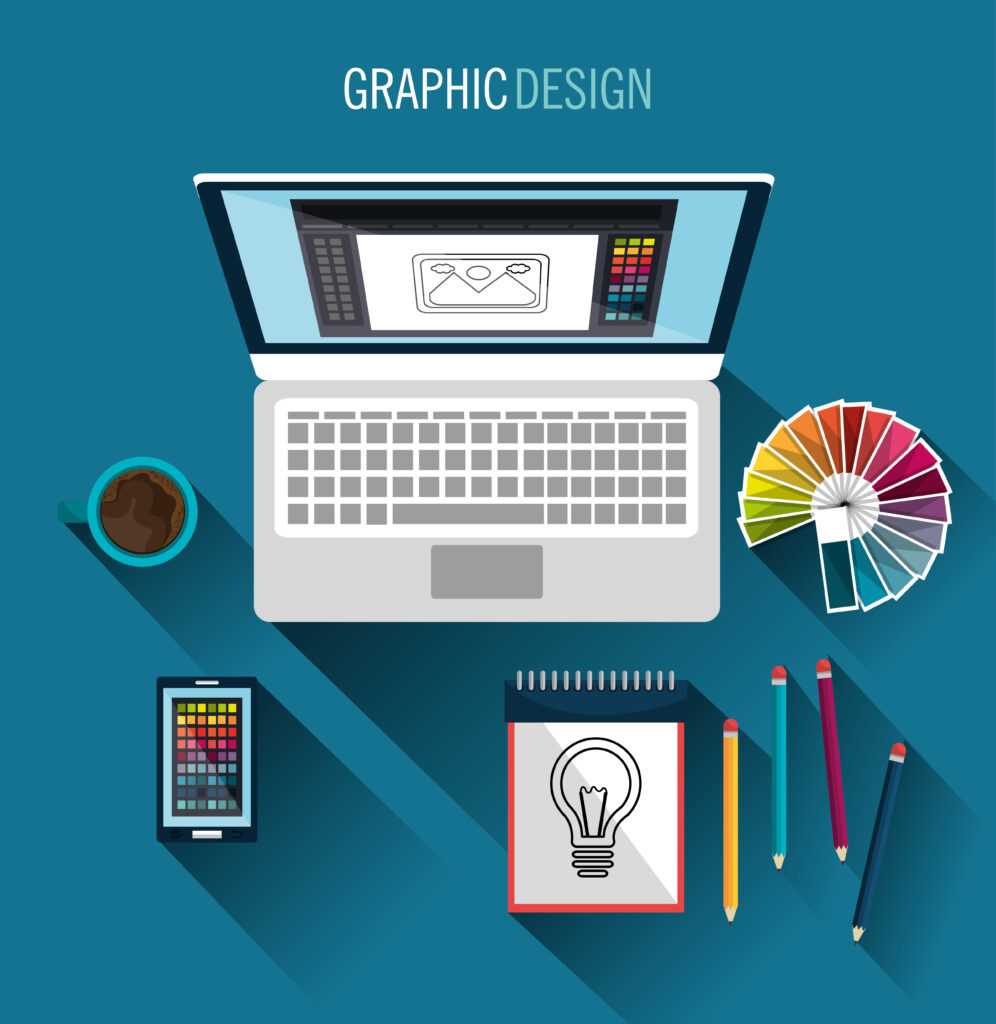
Graphics Designing
Graphic design plays a crucial role in digital marketing, acting as the visual communicator between brands and their audiences. In a world where attention spans are short and competition is fierce, high-quality visuals are essential to capture interest, convey messages, and drive engagement. Whether it’s through social media, email campaigns, websites, or online ads, graphic design helps businesses stand out, build brand identity, and convert viewers into customers.
In digital marketing, the primary goal is to promote products, services, or content online. Graphic design supports this goal by creating visually appealing content that aligns with the brand’s message and marketing strategy. Every visual element — from logos and banners to infographics and animations — is crafted to grab attention and guide the viewer toward a desired action, such as clicking a link, making a purchase, or sharing content.
One of the key areas where graphic design is used in digital marketing is social media. Platforms like Instagram, Facebook, LinkedIn, and Twitter are highly visual, and posts with eye-catching graphics tend to perform much better than text-only posts. Designers create branded templates, promotional graphics, carousel posts, and video thumbnails to ensure consistency and engagement. The right use of colors, fonts, and layouts can significantly increase likes, shares, and comments, boosting a brand’s online presence.
Website design is another important aspect. A well-designed website not only looks professional but also improves the user experience. Graphic designers work on visual elements like headers, buttons, banners, and icons to make the site intuitive and appealing. In digital marketing, the design must support the marketing funnel — guiding visitors from curiosity to conversion, often through landing pages, lead capture forms, and compelling visuals.
Email marketing also benefits greatly from graphic design. Well-designed email templates with attractive headers, product images, and clear calls to action can increase open and click-through rates. Visual consistency across emails reinforces brand identity and trust, which are essential for long-term customer relationships.
Another powerful tool is infographics, which combine information and visuals to present data in a simplified, engaging way. In content marketing, infographics are shared widely because they are easy to understand and visually appealing. They help marketers communicate complex ideas quickly, improving audience comprehension and retention.
Digital advertisements — such as Google Ads, Facebook Ads, and banner ads — rely heavily on strong graphic design. These ads often have limited space and time to make an impression, so every design element must be optimized for impact. A compelling design can increase click-through rates and return on investment (ROI) significantly.
In conclusion, graphic design is a cornerstone of digital marketing. It enhances visual communication, builds brand identity, and improves the effectiveness of marketing campaigns across all digital channels. Without good design, even the best marketing message can get lost. By combining creativity with strategy, graphic design ensures that digital marketing not only reaches the right audience but also makes a lasting impression.